


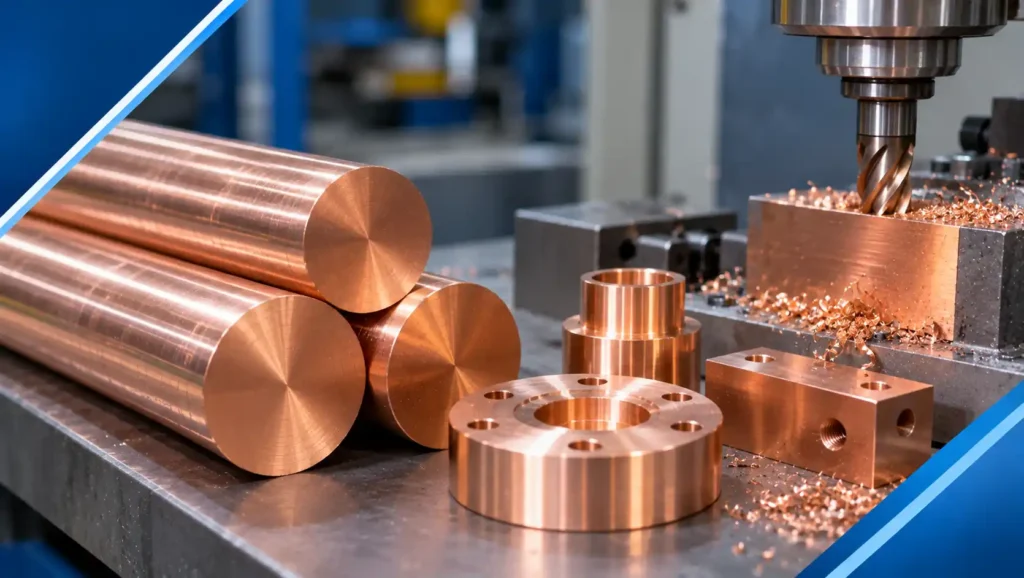
Copper has different machining characteristics from steel, so understanding the material grade and processing requirements matters when preparing an industrial component. Before you specify copper bar stock for a component, it helps to know which copper grade you are actually working with and which of our processes will get you to the tolerance and finish your drawing calls for. Here is what matters.
What Copper Bar Stock Is Typically Used For
Copper belongs to the red metals category, alongside brass and bronze. These materials are used in industrial applications where properties such as corrosion resistance, conductivity, and mechanical performance need to be considered. That combination is why copper shows up in components where conductivity, corrosion resistance, or both are part of the design requirement, rather than in parts chosen purely for mechanical strength the way a carbon or alloy steel might be.
110 Copper and 145 Tellurium Copper: Two Different Starting Points
Not every copper bar is the same copper bar, and the grade you specify should match what the part actually needs to do. 110 Copper is an electrolytic tough pitch grade known for its high electrical conductivity, making it worth considering when conductivity is a primary design requirement. 145 Tellurium Copper Round Bar Stock, on the other hand, is a free machining copper grade designed to offer improved machinability compared with conventional copper grades. If your part is going to see heavy machining time, that distinction between a grade selected for conductivity and one selected for machinability is worth settling before the bar ever gets cut.
Milling Considerations for Copper Components
Copper is one of the materials covered under our milling capability, which handles complex shaping, accuracy work, and larger material removal, and produces planar surfaces, slot and hole features, and cutouts using manual and CNC operations. Our milling capabilities include tolerances of ±0.0001 inches and ±0.0005 inches, depending on the material, component geometry, and processing requirements. Copper’s machining characteristics differ from those of steel, so sharing your target tolerance and component requirements helps us understand the milling specifications before work begins.
Surface Finish Options for Copper Parts
Copper is also one of the materials we polish, using manual, automated, mechanical, or CNC polishing methods. Polishing copper can help remove surface oxidation, improve its appearance, and produce a more reflective finish. Depending on the application, it can also support surface cleanliness and preparation. If your component is going into an assembly where appearance or a clean surface with reduced oxidation matters alongside the dimensions, polishing is worth specifying alongside your machining requirements.
What to Consider When Specifying Copper Bar Stock
When you are putting together a request for copper bar stock, start with the intended application and the material properties that matter most. Whether conductivity or machinability is the priority, include the grade you are considering and any relevant component requirements. From there, give us your target tolerance for milling or other machining work and let us know if a polished finish is part of the requirement. We also supply copper precision ground bar stock, so if your component requires a specific diameter or surface finish, include those details in your request.
Conclusion
If you are specifying copper bar stock for an industrial component and want to talk through which grade fits your application or what tolerance and finish we can hold on the machining side, we can review those requirements with you before you place an order. Call O’Hare Precision Metals at (847) 640-6050, email sales@ohareprecision.com, or submit your specifications through our Request a Quote page, and we will help you match the copper grade and process to your part.
FAQs
What is the difference between 110 Copper and 145 Tellurium Copper?
110 Copper is an electrolytic tough pitch grade with the highest electrical conductivity in our copper offering, while 145 Tellurium Copper Round Bar Stock is a free machining copper intended to cut more easily during machining.
What tolerance can you hold when milling copper components?
Our milling capabilities include tolerances of ±0.0001 inches and ±0.0005 inches, depending on the material, component geometry, and processing requirements.
Can copper bar stock be polished?
Yes. Copper is one of the materials we polish using manual, automated, mechanical, or CNC polishing methods. Polishing can improve appearance, remove surface oxidation, and produce a reflective finish.
Is copper bar stock available as centerless ground stock?
Yes. Copper is listed among the materials covered under our centerless ground bar stock offering.