


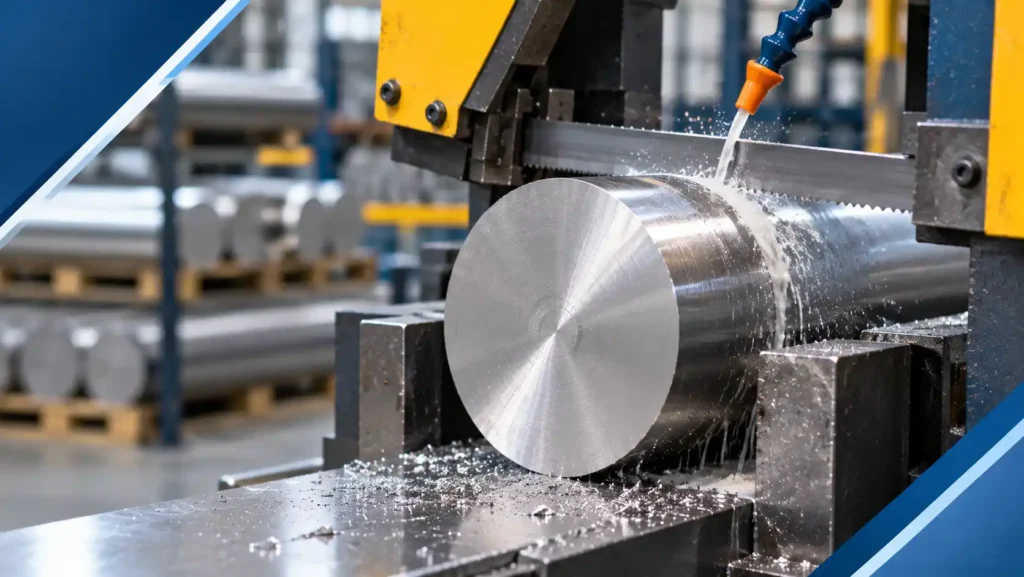
When a machinist tells us a part came out short, or a batch of blanks fell outside the specified tolerance before the first cut was even made, the problem can sometimes trace back to how the bar stock was cut to length in the first place. At O’Hare Precision Metals, we have been supplying round bar out of Arlington Heights since 1970, and saw cutting is an important step to consider because getting the bar length right can save machining time once a part hits the mill or the lathe.
If you are specifying bar lengths for an upcoming job, the goal is not just a clean cut. It is a cut that sets your part up to hold tolerance through every operation that follows.
What Precision Saw Cutting Actually Involves
Saw cutting sounds simple until you compare methods side by side. We use cold saw blades to produce clean, smooth cuts with minimal material waste. Compared with methods such as friction sawing, hot sawing, and conventional bandsawing, cold saw cutting can provide advantages in cut quality. That matters for two reasons. First, less material lost at the cut line means less scrap on long production runs. Second, a clean cut face gives you a more consistent starting point for whatever comes next, whether that is centerless grinding, turning, or a milling operation.
We run both automated CNC saws and manual or power bar saw setups, so the method we use depends on the diameter, the quantity, and how tight the length tolerance needs to be.
Why Bar Length Matters Before You Start Machining
A bar that is cut too long for a given fixture or chuck depth can introduce vibration once it is spinning in a lathe or sitting in a mill. We use specialized saws for shorter bar lengths specifically to reduce that vibration during machining. If you already know the final part length and the stock allowance your process needs, telling us that up front lets us choose the cutting approach that will give you a steadier piece to work with.
This is also where tolerance and cycle time connect. Holding tighter tolerances at the saw can reduce machine time downstream, since your operator is not spending extra passes squaring up an end or chasing a length that drifted from the print.
How Our CNC Saw Capabilities Support Tight Tolerances
Our automated CNC saws cut material up to 7 inches in diameter, and we cut to custom dimensional requirements rather than only standard stock lengths. We can work to tighter length tolerances than standard cutting requirements, depending on the job specifications, which matters if your downstream process, say a grinding or turning operation, has little room to correct for a length that is off.
Our saw cutting process is designed to produce smooth cut surfaces with low roughness. A smooth cut surface and consistent bar length can make material preparation more predictable before turning, milling, or grinding. For jobs that require more than one operation, providing the finished dimensions and stock allowance helps establish the cutting requirements.
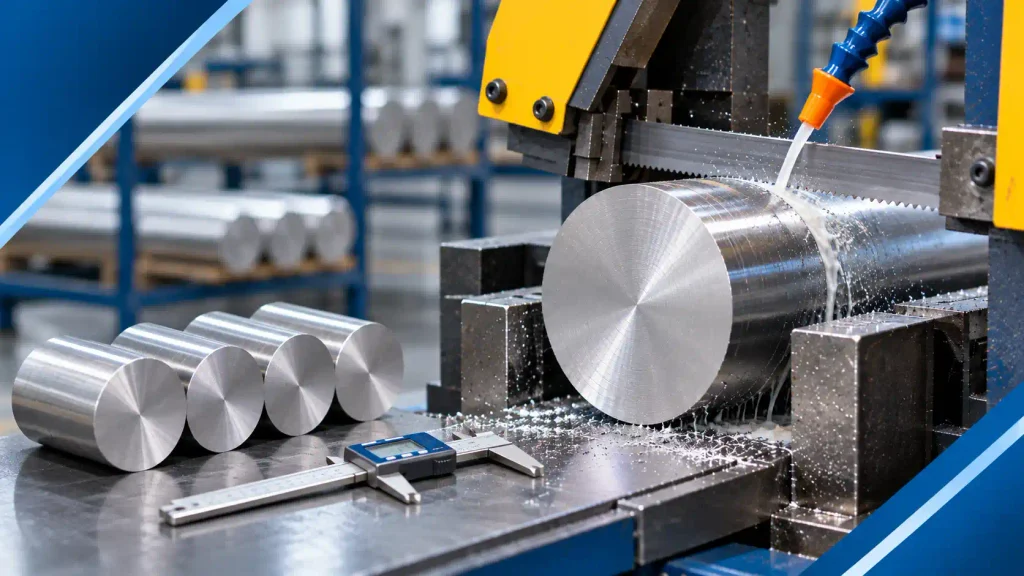
What to Consider When Specifying Your Bar Lengths
A few questions are worth answering before you send us a cut list. What is the finished part length, and how much stock allowance does your process actually need beyond that? Will the part be held in a collet, a chuck, or a fixture where excess overhang could introduce chatter? Is this a one time run or a repeat order where consistent length from bar to bar matters more than on a single batch?
We work from custom dimensional requirements rather than a fixed catalog of stock lengths, so the more specific you can be about the finished part and the process it is heading into, the more precisely we can match the cut to the job.
Materials and Industries We Support With Saw Cutting
We supply a wide range of materials, including stainless steels, alloy steels, carbon steels, tool steels, aluminum, nickel and high temperature alloys, medical grade stainless steel, brass, copper, and bronze. Share your material grade, diameter, and required length when requesting saw cutting so we can review the job specifications. Customers across automotive, aerospace, military and defense, construction, mining, medical, and chemical processing work rely on us for bar stock cut to their specifications rather than off a generic length chart.
Conclusion
If you have a job coming up where bar length and cut quality matter as much as the grade of material, we can review your material and cutting requirements before production begins. Call us at (847) 640-6050, email sales@ohareprecision.com, or submit your specifications through our Request a Quote page, and we will help you figure out the cut that sets your machining process up right from the first pass.
FAQs
What cutting method do you use for round bar stock?
We use cold saw blades to produce clean, smooth cuts with minimal material waste. This method offers advantages in cut quality compared with friction sawing, hot sawing, and conventional bandsawing.
Can you cut bars to a custom length instead of a standard stock length?
Yes. We cut to custom dimensional requirements and can work to tighter length tolerances than standard cutting requirements, depending on the job specifications.
Does bar length actually affect how a part machines later?
It can. Excess length or overhang can introduce vibration once the bar is being machined, which is why we use specialized saws for shorter bar lengths to help reduce that vibration.
What is the largest diameter your saws can handle?
Our automated CNC saws cut material up to 7 inches in diameter. We also offer manual and power bar saw options depending on the job.